N+NATURE PLAYWORKS
Game Theory Report 5 GAMES ONLINE
GAME THEORY ARCADEFIVE ROUTES FOR EVERY PLAYER
PLAY / THINK / REDESIGN

Play with the rules that help people protect nature together.

Connect a forest, protect a migratory route, or keep good food from going to waste. In every story, care for nature meets the need to protect a livelihood or a business. Become a corridor coordinator, an estuary manager, a supermarket buyer, or another decision-maker, and discover what the characters need before they can cooperate.

Choose a starter
Read the Game Theory Report
LEARNING COMPANIONBefore changing people, change the rules of the game.

Nature problems are not stories about bad people. When everyone protects their own livelihood, sales, or repayments, the whole group can somehow still end up worse off. Learn to spot those conditions and redesign them so cooperation can last.

EXPERIENCE IT IN 15 SECONDS

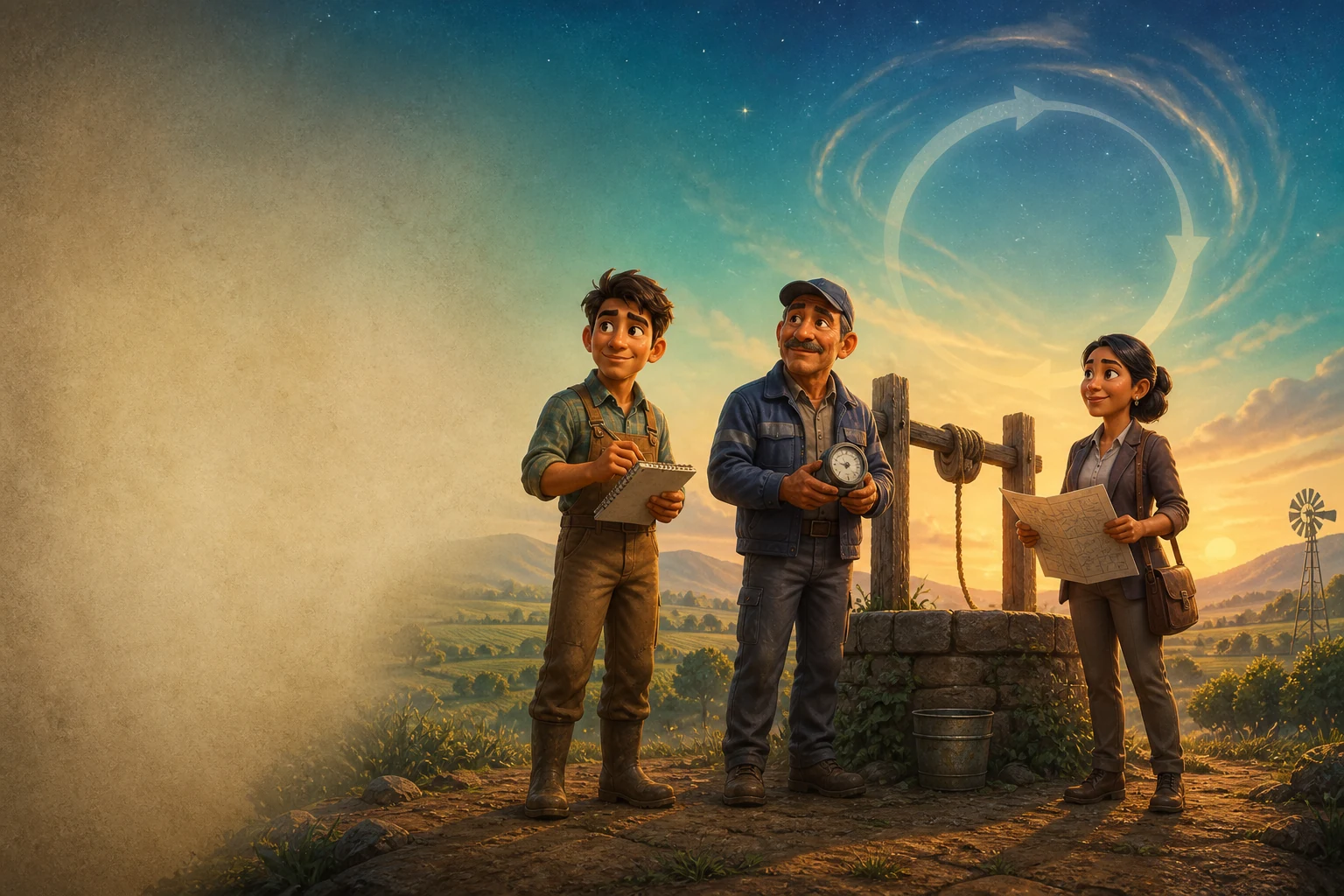
A shared well. Your neighbor may pump more.

What would you do if only this season's yield mattered?

  1. 01

    Non-cooperation can arise from rational choices under the current rules, not from bad intentions.

  2. 02

    Disclosure alone is not enough. Costs, benefits, rights, and time must change together.

  3. 03

    Align the boundaries of nature, decision-making, and repayment sources.

  4. 04

    Test not only nature recovery, but also durable benefits and repayment sources that keep people participating.

  5. 05

    Design rules that make cooperation rewarding instead of relying on requests.

WHAT YOU WILL EXPERIENCE

These five story-based simulations are designed for solo play. Choose an action, examine the result, and reconsider how information, compensation, or the terms of an agreement could change it. Maps, decision histories, and changes in benefits and burdens help you discover the conditions that make cooperation last.

Game theory is a way to think about your decisions alongside the choices other people make. No prior knowledge is needed. Start with a story that interests you, then take one question back to everyday life: who can join with confidence, and under what conditions?

  1. Read each character’s aims and concerns, then anticipate their choice.

  2. Choose actions or rules and examine effects on nature, livelihoods, and trust.

  3. Compare results and reasons, then explore cooperation under different conditions.

PLAYER PATH 01I like maps and spatial puzzles
Before-and-after comparison · 1 shock

The story and your role

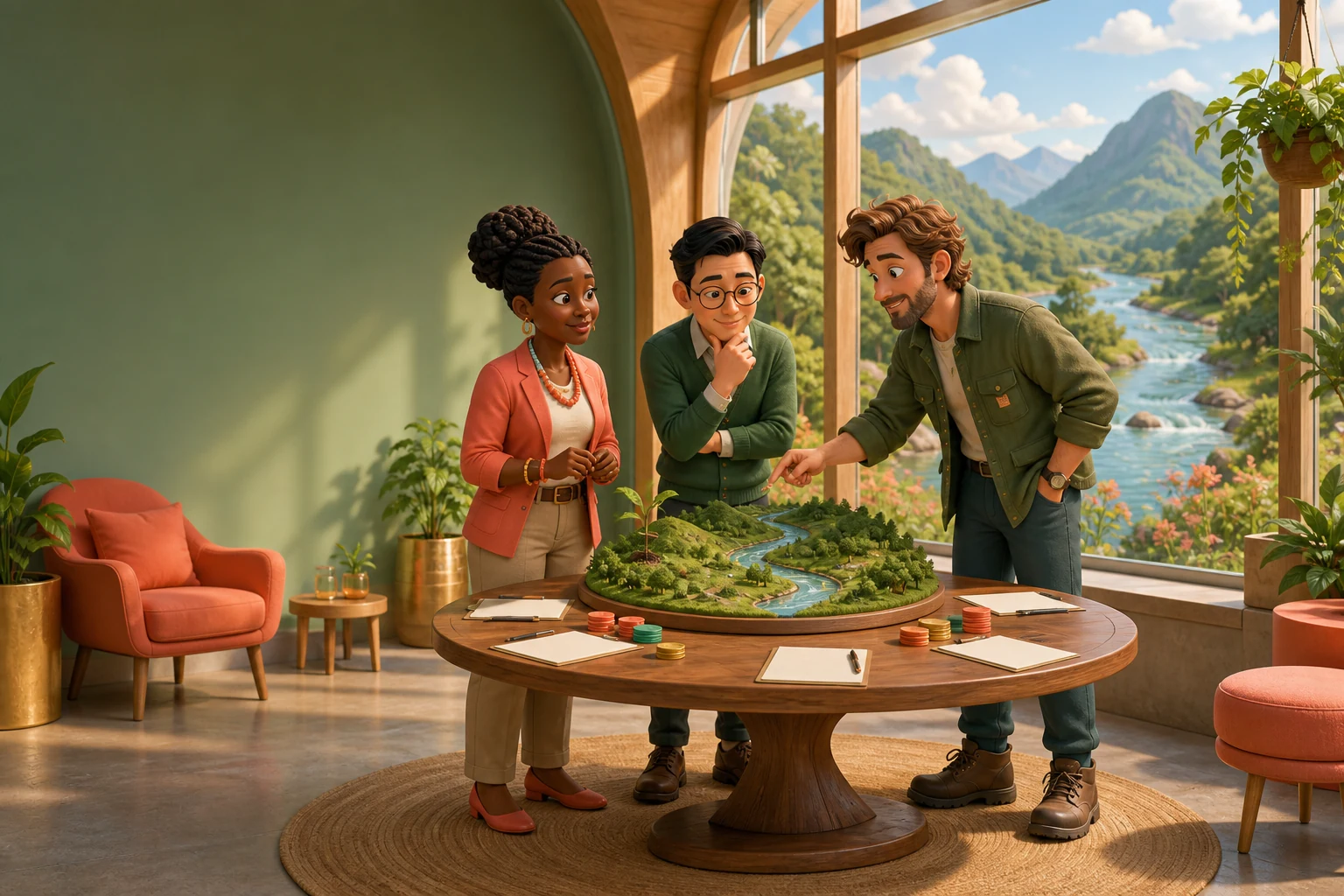
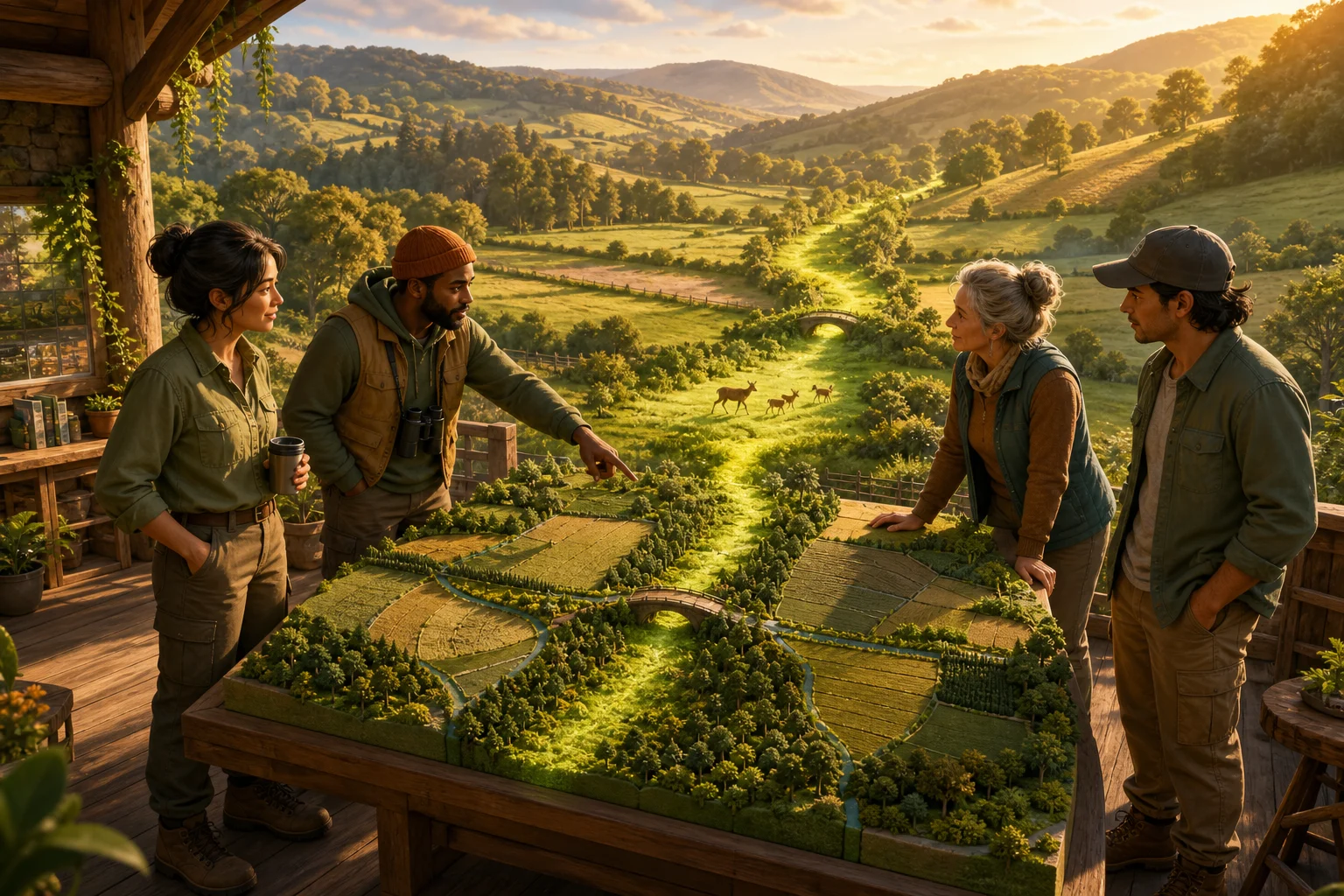
You own a riverside parcel and coordinate a wildlife corridor with a farmer, a woodland owner, and a community developer. Connecting all four parcels creates greater value for nature, but the fear of paying the cost alone keeps the habitats apart.

What you will do

First choose development, early protection, or a statement of conditional intent, then inspect all four outcomes. Choose one institution: an all-party commitment, a guarantee for early movers, or a payment for the crucial parcel. See how decisions change, then test the corridor, livelihoods, and trust against rising land prices.

What makes it rewarding

The people stay the same, but changing the agreement changes whether the land connects. See a hesitation about being the only person to lose give way to a shared corridor. Playing again with another institution lets you compare how cooperation forms and which vulnerabilities remain afterward.

GAME THEORY TYPEStag Hunt (Assurance Game)

Explore a stag hunt, also called an assurance game: cooperation creates greater value when everyone joins. Compare decisions before and after an institution is introduced to see how credible participation and protection against first-mover losses can change the group’s choices.

PLAYER PATH 02I like strategy and reading moves

FLYWAY

Protect a migratory journey and regional trust over seven seasons

7 seasons · Design a treaty along the way

The story and your role

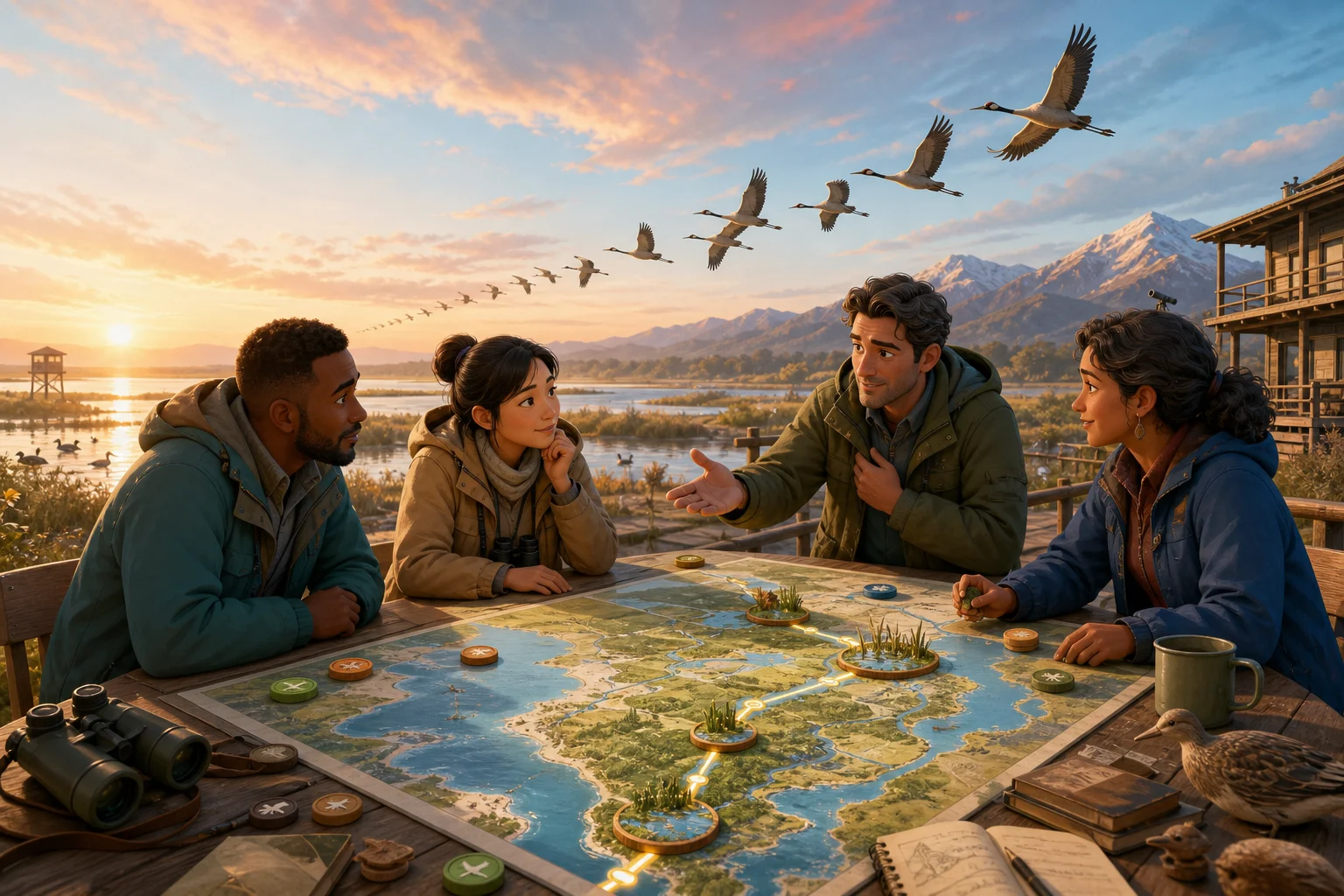
You manage the fourth estuary on a migratory route, protecting wetland alongside three other regions while supporting local prosperity. Development may pay this season, but the way others respond next season changes the future of both the birds and your relationships.

What you will do

Choose to protect wetland or develop the coast in each of seven seasons, then inspect the other regions’ moves and the shared history. After season three, choose joint monitoring, an apology with one-time forgiveness, or cost compensation. Follow birds, prosperity, and trust through an episode in which protection can be reported as development.

What makes it rewarding

One region mirrors your previous move, another watches the wider group, and a third forgives once. Anticipate these different responses and see cooperation spread. Try another response to misunderstanding on a new playthrough, and discover how the same protective choice can lead to a different relationship.

GAME THEORY TYPERepeated Prisoner’s Dilemma

This story explores the iterated prisoner’s dilemma: today’s gain matters alongside a partner’s response and the value of future cooperation. Across seven seasons, examine how decision histories, mistaken observations, forgiveness, and compensation affect whether cooperation continues.

PLAYER PATH 03I like decisions and teamwork

COOP//NATURE

Help a store, producer, and food bank cooperate to save food

5 events · Improve the rules

The story and your role

You are a supermarket buyer working with a store manager, a producer, and a food-bank coordinator to find a use for surplus food. Each faces a different concern: empty shelves, uncertain revenue, or delivery costs. Across five events, find conditions that save food and make participation worthwhile for everyone.

What you will do

Predict whether each of the three characters will cooperate or protect their own position, then choose an ordering, selling, or delivery action. Read the outcome and its reasons before designing shared information or a purchase guarantee. Add monitoring or compensation, replay a situation, and take the revised rules into events such as a broken refrigerator or closing-time surplus.

What makes it rewarding

A proposal that looks helpful can stall because one person carries the burden. Their decisions and payoffs reveal why. Replay the same Monday with different rules and discover what changes a hesitant response into cooperation, while looking for a combination that improves food use, stock, and trust.

GAME THEORY TYPEBest Responses · Nash Equilibrium

Explore best responses and Nash equilibrium by asking what each person gains from cooperating or acting alone. Check whether someone would benefit from changing their choice or leaving the arrangement. Then adjust information and costs to design rules that people can keep using.

PLAYER PATH 04I like stories and mysteries

LOOP 20

Use three repeating mornings to find rules that protect groundwater

3 mornings · 2 sites each morning

The story and your role

Rain has returned, but the town's groundwater keeps falling. Play a young investigator who can rewind time and uncover the concerns of a farmer, a beverage-plant operator, and a community lender. This solo mystery asks you to connect the causes across three mornings and find rules that let everyone conserve.

What you will do

Each morning, choose two of five sites, reveal their evidence, revise your hypothesis, and carry one memory forward. Connect your three memories as natural change, people's choices, and institutions. With a budget of 4, choose one core rule and up to two supports. Compare the characters' choices with the old rules, and check water recovery, finance, and cost sharing.

What makes it rewarding

The same morning looks different when you change where you investigate and which memory you keep. A rainfall explanation gives way as scattered clues connect. Changing one rule card lets you see whose reasons for cooperating change, making each revision an experiment you can understand.

GAME THEORY TYPECommon-Pool Resource Game

Pumping gives one user an immediate benefit while the cost of falling water spreads across the region. Test explanations against evidence, then change rights, measurement, and repayment terms to change individual choices. Explore mechanism design by making cooperation worthwhile for each participant.

PLAYER PATH 05I like dialogue and reading people

NATURE DEAL LAB

Hear three perspectives and build a deal that survives a crisis

3 interviews · 3 shocks

The story and your role

The investment could help nature, yet moving first costs the bank, pension fund, and operating company. You are the deal designer who listens to all three. Create and share the value of joining, then aim for an agreement that can last through drought and cash shortages.

What you will do

Choose one question for each character to unlock contract clauses. Combine one base package with two clauses, then allocate value among the three parties and a nature recovery reserve. Check whether a person or pair would leave. Once all sign, choose responses to three shocks and use one renegotiation along the way.

What makes it rewarding

Changing your questions changes the clauses available for the same three characters. Even after everyone signs, drought and conflicting data test the deal. Should you shift a little value or preserve the reserve? Each decision lets you explore another way to keep the agreement together.

GAME THEORY TYPECooperative / Bargaining Game

Is joining better than staying out? Could two participants do better by leaving together? Use numbers to explore outside options, participation constraints, and coalition stability. Then see how contract terms protect the agreed value when outcomes arrive late or evidence conflicts.

MODEL BOUNDARYThis game is a learning model for testing game structures.

The cases are fictional learning scenarios based on typical use cases.

NATURE PLAYWORKS / 2026NO LOGIN · LOCAL SAVE · FREE PLAYCreative Commons (CC BY-NC 4.0): Dedicated to Nature. Earthday Everyday/Tetsu Hattori LinkedIn