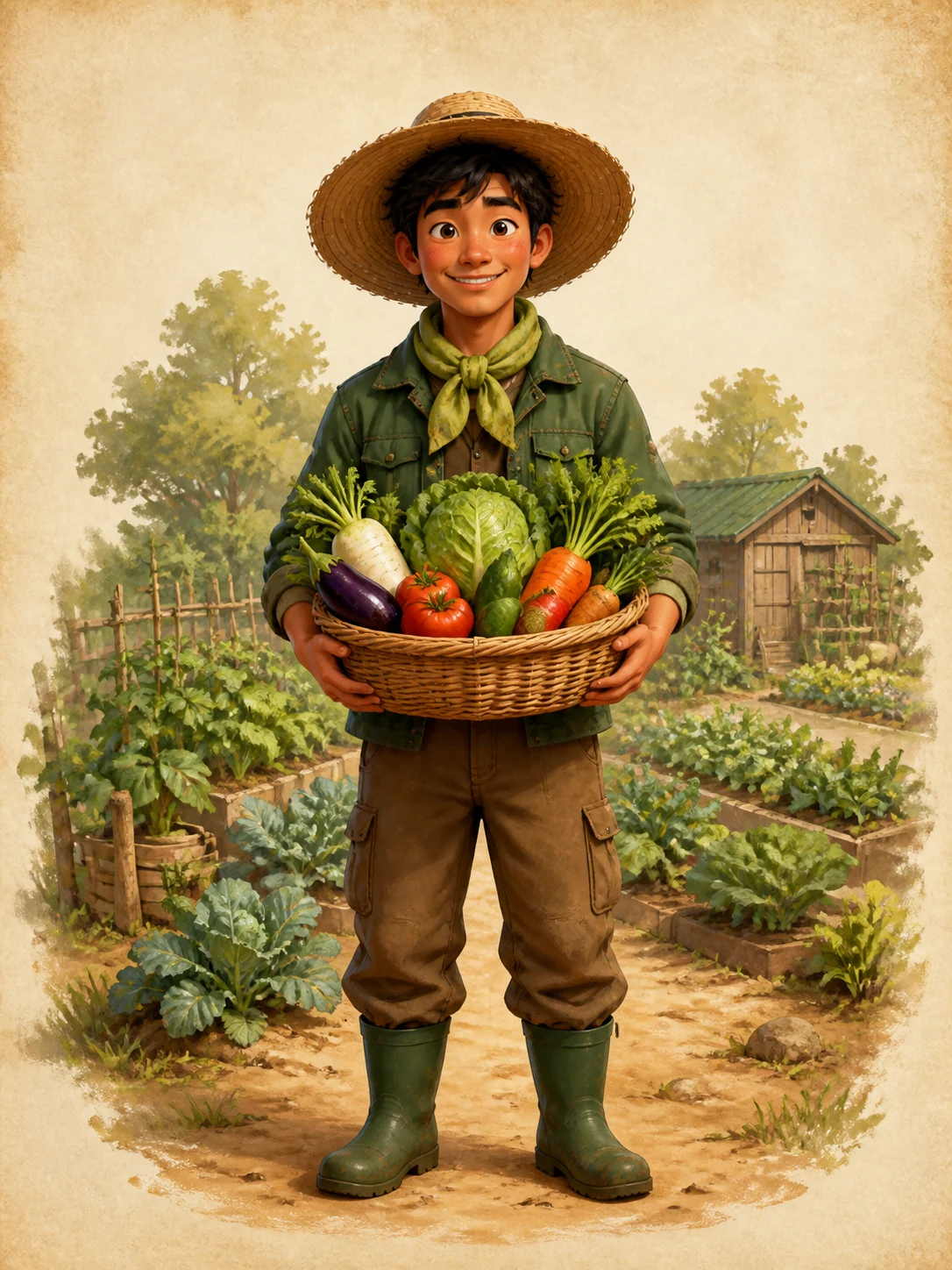
Nana
Store manager- Goal
- Avoid stockouts and protect today's sales
- Fear
- Cutting stock alone and losing customers
- Outside option
- Build safety stock alone (2.4)
Monday’s demand is uncertain; Tuesday brings misshapen vegetables. As the supermarket buyer, you face five events with a store manager, a producer, and a food-bank coordinator. Predict their responses, choose an action, and examine its effects on food, stock, and trust. Replay the same situation with shared information or compensation to uncover each person’s concern and the conditions that make cooperation last.
Utility = today's personal payoff + future cooperation value × trust − own cost − expected violation loss
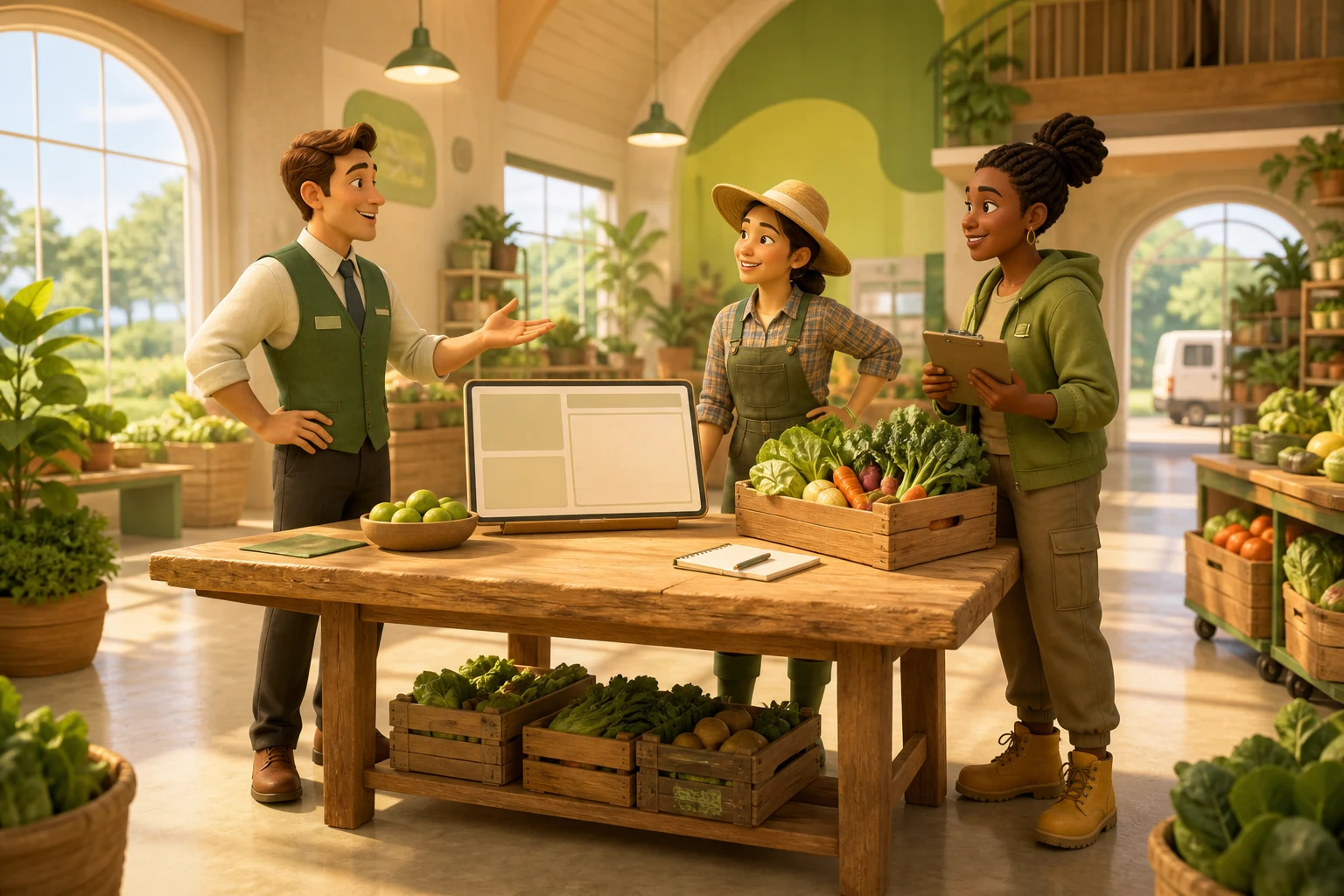
Your path through the game
Predict whether each of the three characters will cooperate or protect their own position, then choose an ordering, selling, or delivery action. Read the outcome and its reasons before designing shared information or a purchase guarantee. Add monitoring or compensation, replay a situation, and take the revised rules into events such as a broken refrigerator or closing-time surplus.
Read the three concerns, predict responses, and choose an action.
Use the result to design rules, then replay the situation.
Check food, stock, trust, and burdens across five events.
A proposal that looks helpful can stall because one person carries the burden. Their decisions and payoffs reveal why. Replay the same Monday with different rules and discover what changes a hesitant response into cooperation, while looking for a combination that improves food use, stock, and trust.
Explore best responses and Nash equilibrium by asking what each person gains from cooperating or acting alone. Check whether someone would benefit from changing their choice or leaving the arrangement. Then adjust information and costs to design rules that people can keep using.
When food was saved, who paid for the time and effort? If someone wanted to leave, did they need better information, compensation, or a revised agreement? Compare your predictions with the outcomes and explain what gave every participant a reason to stay.
You are the supermarket buyer